01 · Chat first
Discover insights through conversation
Users enter the assistant first, then interact to understand what needs their attention.
Lower engineering investment
Meta / Warehouse Assistant
Turning complex quota decisions
into proactive guidance
I designed an AI experience that helps data warehouse users understand usage, get recommendations, and make allocation decisions with more confidence.
02 · Product goal
Data warehouse admins had to interpret usage patterns and manually decide how to allocate limited quota across different types of data pipelines. These decisions required domain knowledge and ongoing adjustment.
Warehouse Assistant created an opportunity to bring more of that guidance into the product, helping users understand what was happening and what they could do next.
03 · Design challenge
The team agreed on the opportunity, but had different ideas about how the assistant should work for users.
Should users open a conversation to discover insights? Or should useful information appear first, then let users decide whether to engage?
Discussion alone wasn't getting us to a clear direction. I proposed making both ideas real enough to test.
04 · Building alignment
I used AI to quickly turn two ideas into working prototypes, then partnered with Research to test them with users.
01 · Chat first
Users enter the assistant first, then interact to understand what needs their attention.
Lower engineering investment
02 · Insight first
Useful insights appear upfront, with conversation available for deeper reasoning and action.
More engineering investment · Value visible upfront
to turn both directions
into working prototypes
We tested both experiences with five users to understand which approach made the assistant's value easier to see and act on.
The insight first direction was clearly preferred. The research gave the team confidence to invest in the stronger experience and move forward together.
05 · From evidence to product
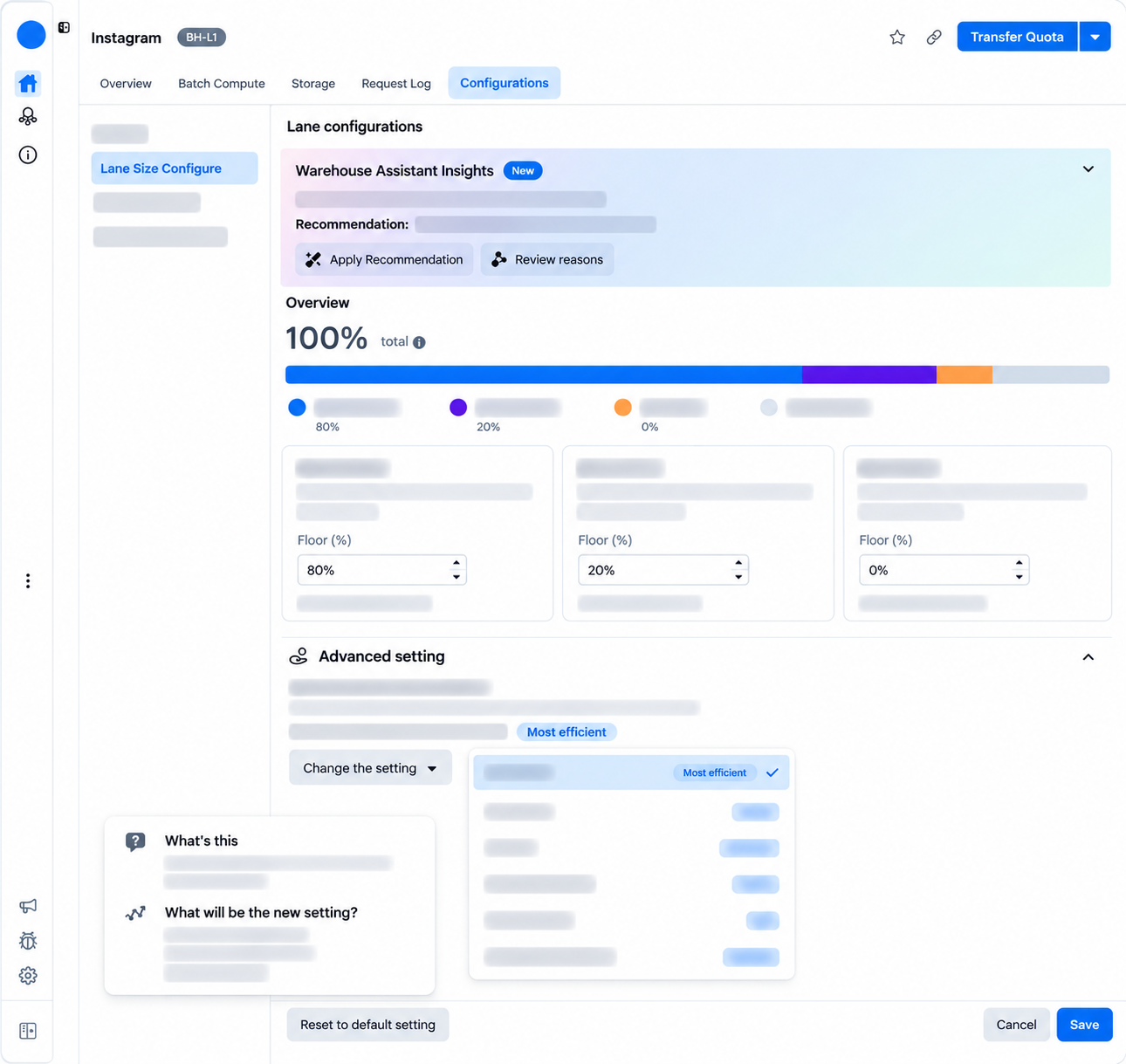
The insight first direction became the foundation for Warehouse Assistant.
01 · Proactive
Warehouse Assistant analyzes usage and brings important insights into the product, without waiting for users to ask.

02 · Contextual
Users can go deeper when they need to understand the reasoning behind a recommendation.
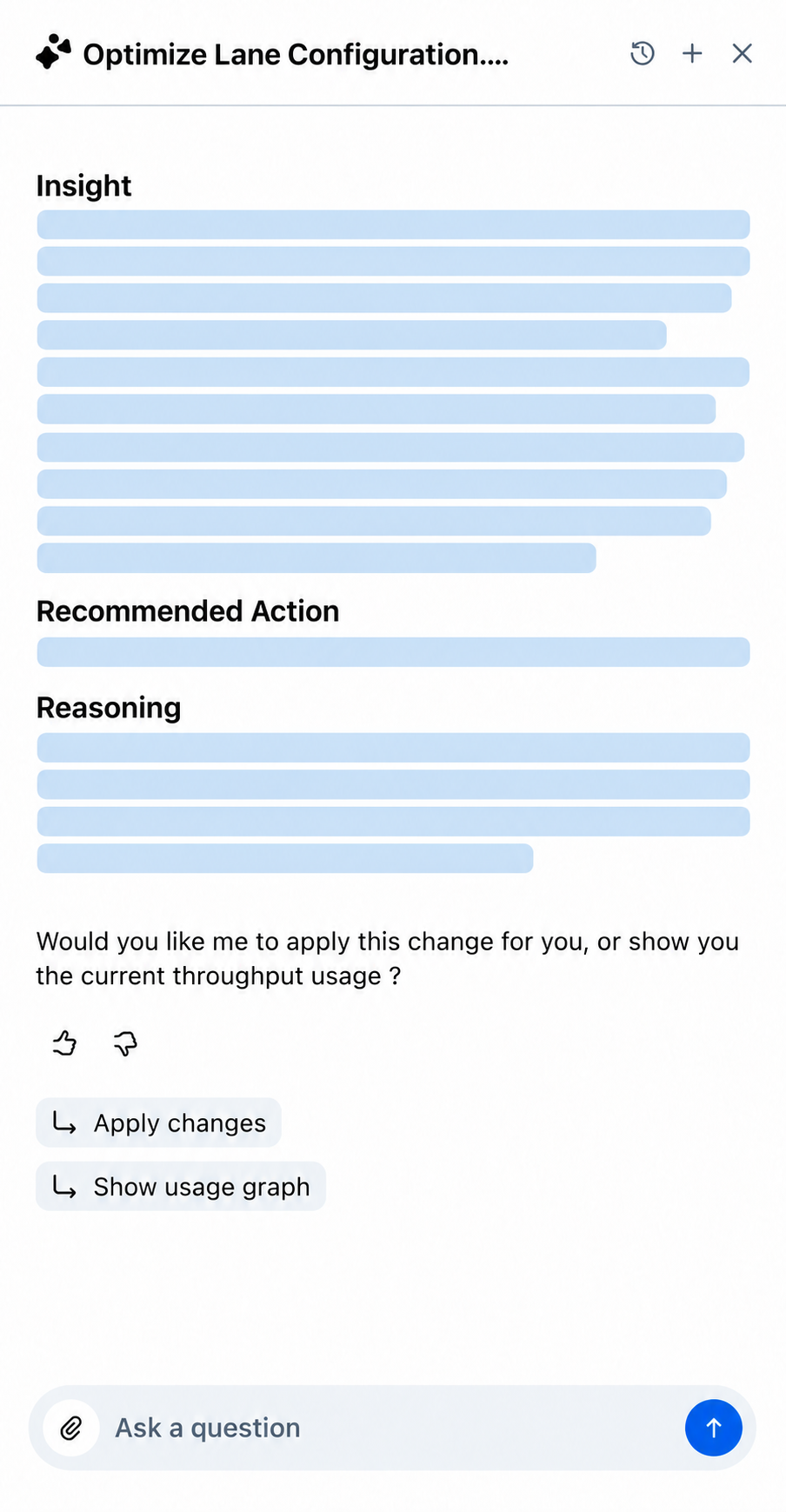
03 · Actionable
Users can review an optimized configuration and apply it with one click.
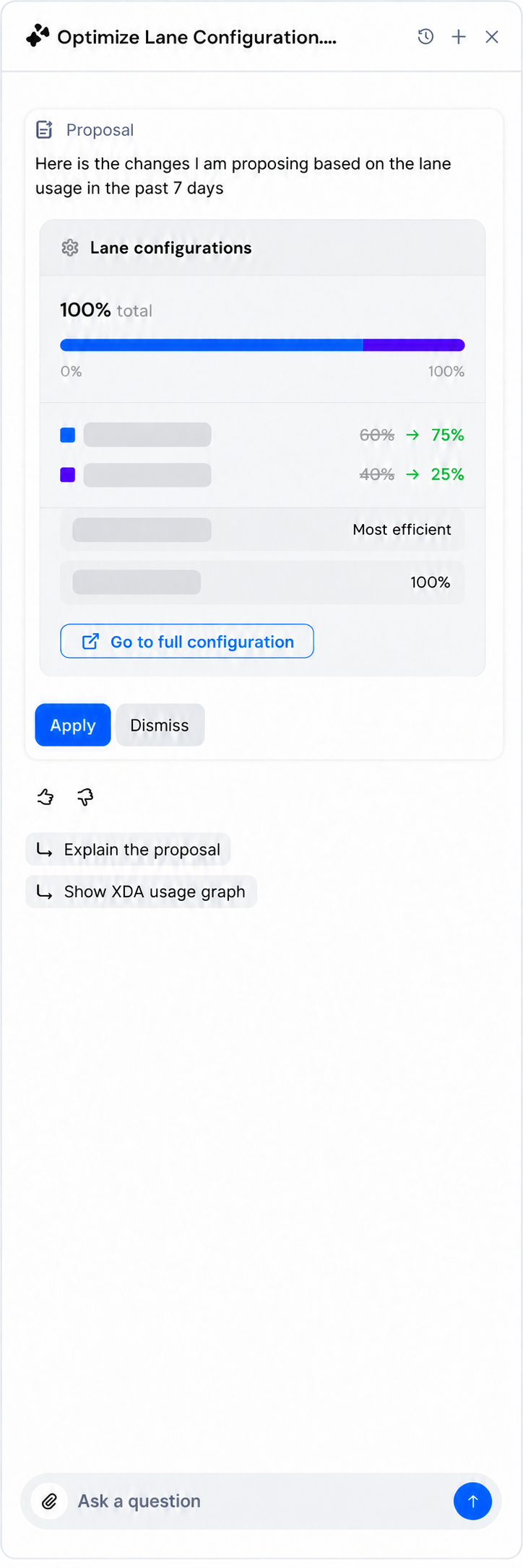
Users can apply a recommendation directly or fine tune the configuration themselves.
06 · Beyond handoff
My involvement continued after handoff. Once Engineering implemented the experience, I used Meta's internal AI coding agent to fix small visual issues directly in production code, then partnered with Engineering to review and ship the changes.