Meta / AI workflow experiment
AI powered
design sprint
I designed a workflow with multiple AI agents to explore a real product problem.
01 / The Experiment
Could AI help run a design sprint?
I tested an AI workflow on a real Meta capacity problem, moving from a research-grounded brief to an exploratory prototype.
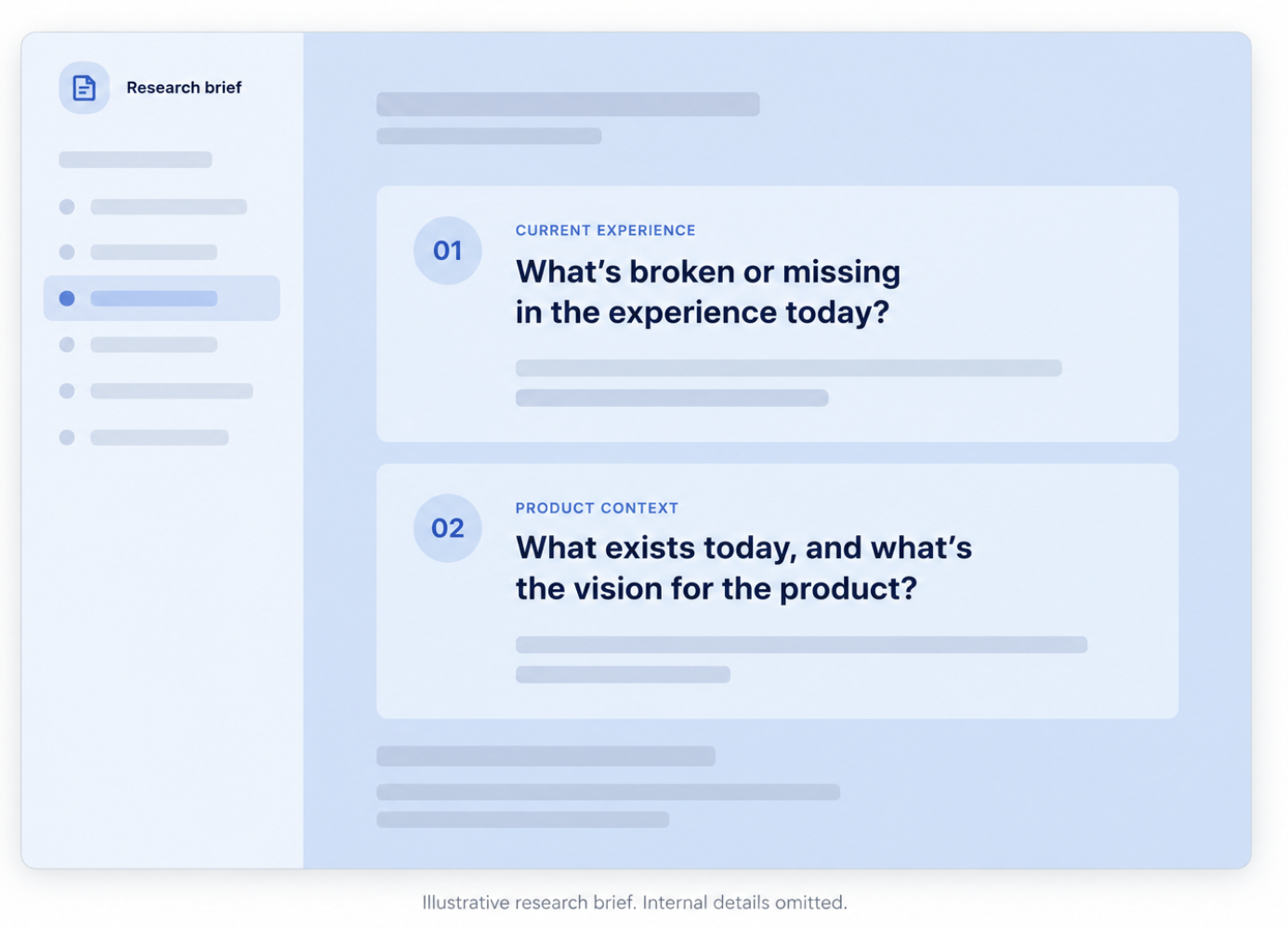
Research input
I worked with Research to frame the question: why were users’ workloads blocked across separate capacity systems? This context gave the agents a real problem and constraints.
02 / I Designed the Workflow
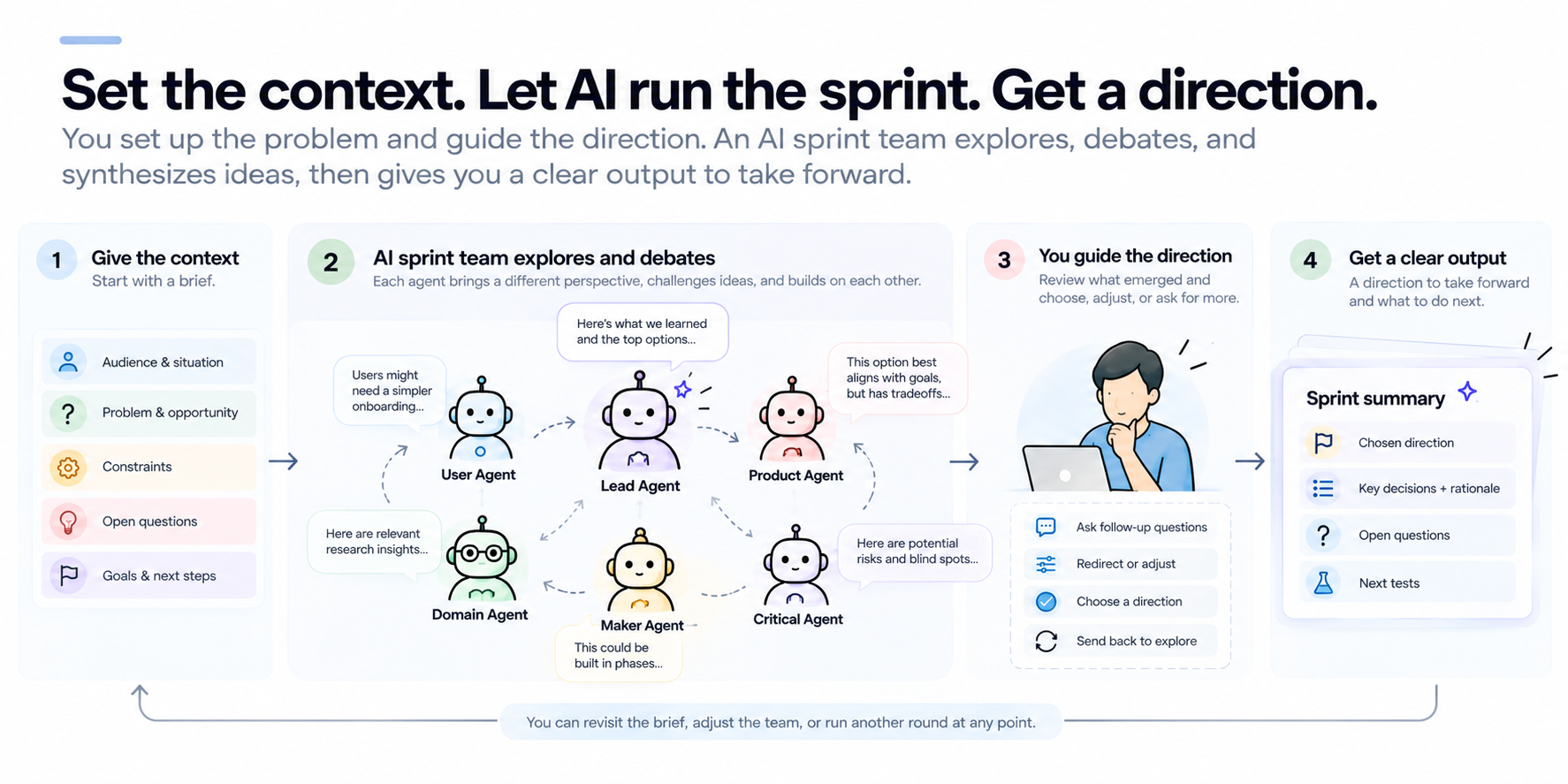
Five perspectives. A facilitator. Human checkpoints.
Five personas explored the problem: Firefighter, Operator, Strategist, Simplifier, and Detective. A separate Lead Agent facilitated, while I guided the direction.
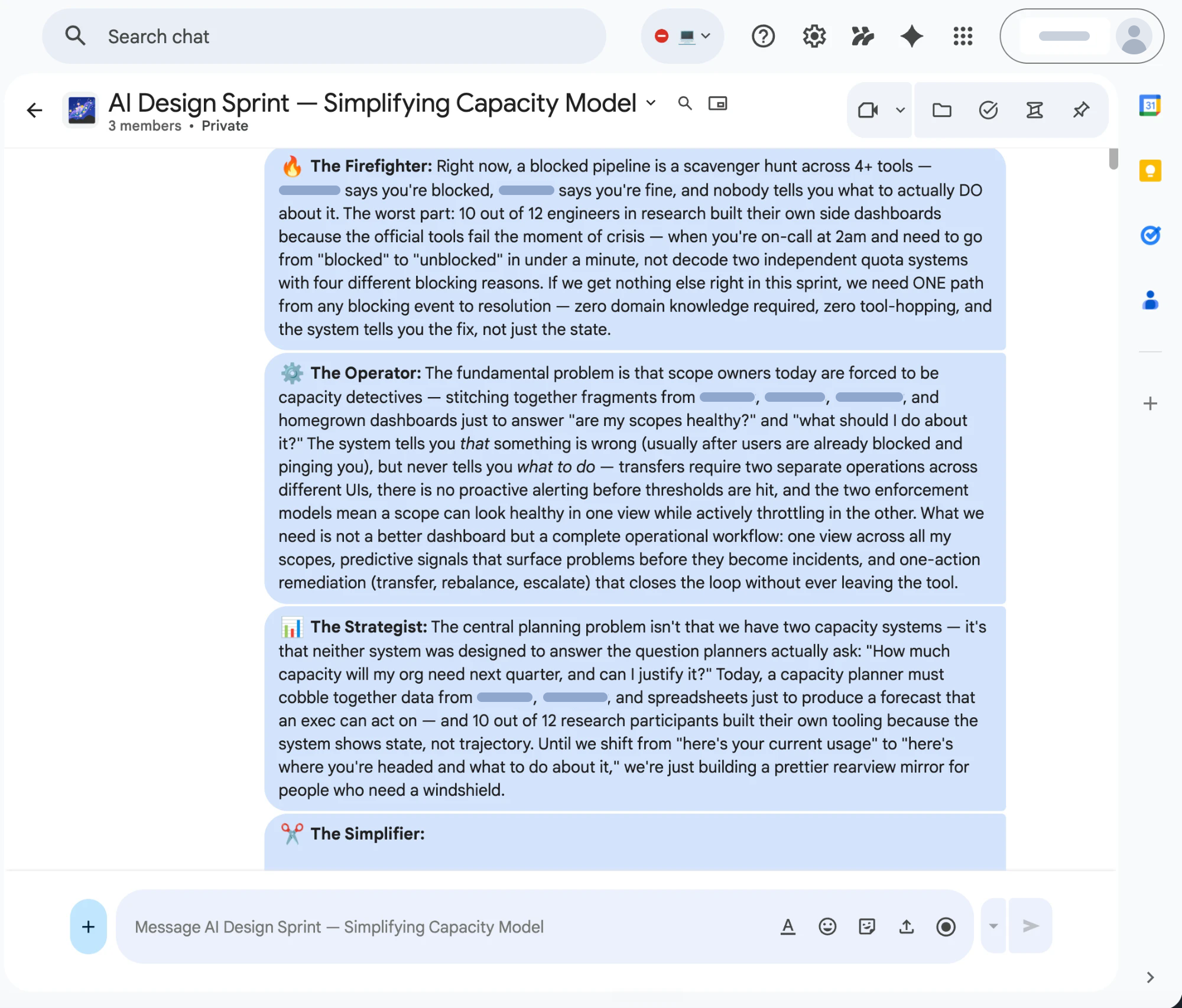
Agent discussion
The agents challenged ideas from different perspectives: immediate recovery, everyday operations, and longer term planning.
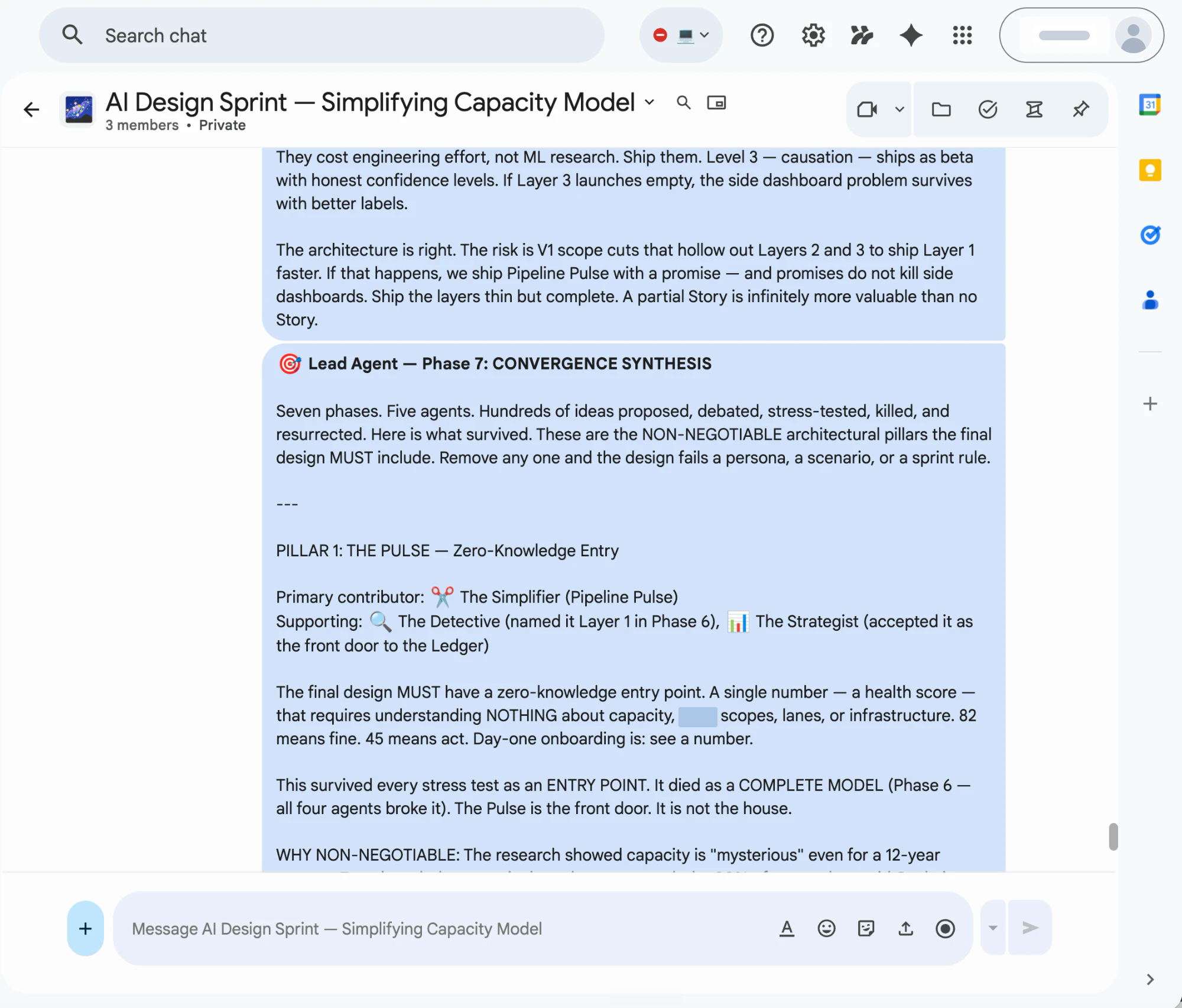
Lead Agent synthesis
The raw discussions became too long to digest. I refined the synthesis step to bring perspectives together, work through overlap and conflict, and make the proposed direction easier to review.
03 / Human Judgment Shaped the Output
A proposal still needed product judgment.
AI gave me a useful, coherent starting point. I added the domain and product context needed to turn that direction into a credible experience.
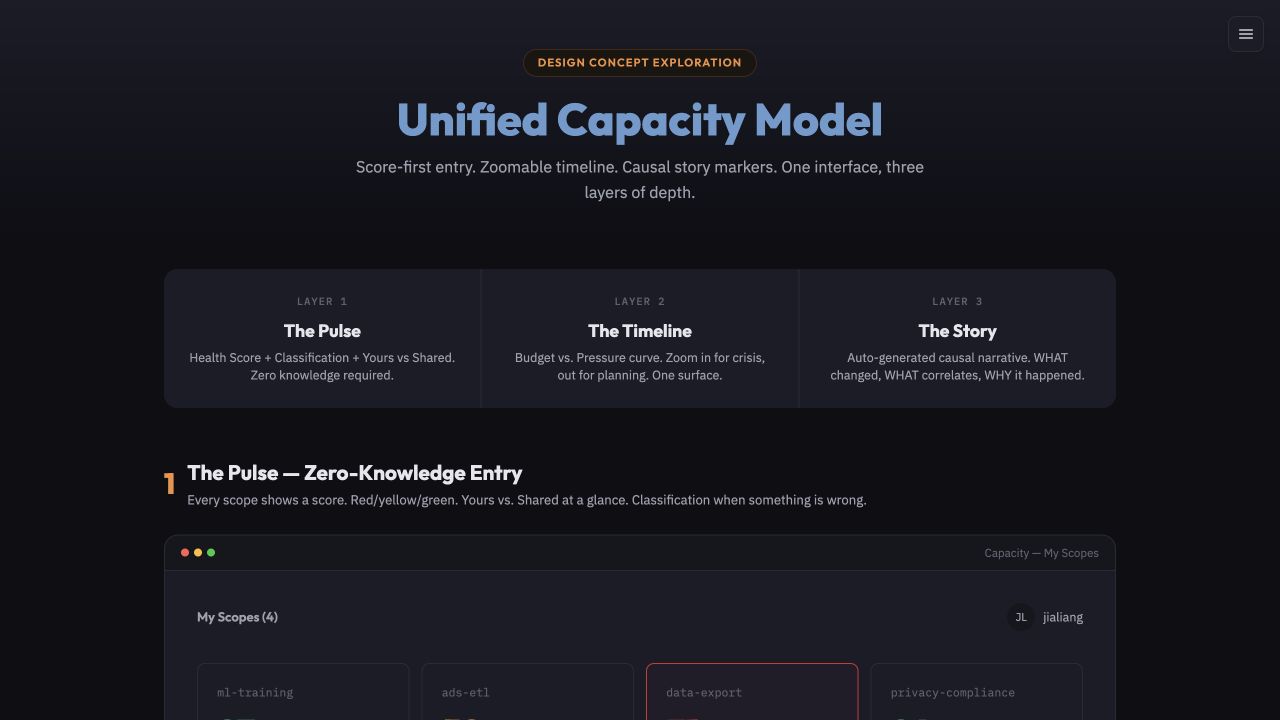 Open full proposal ↗
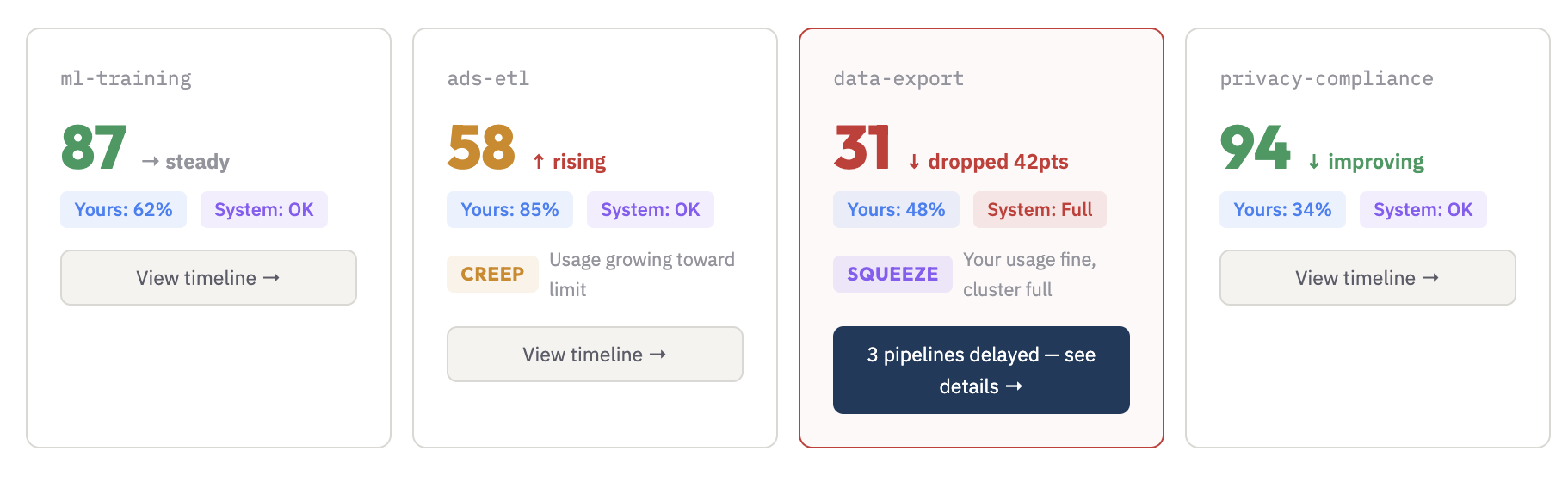
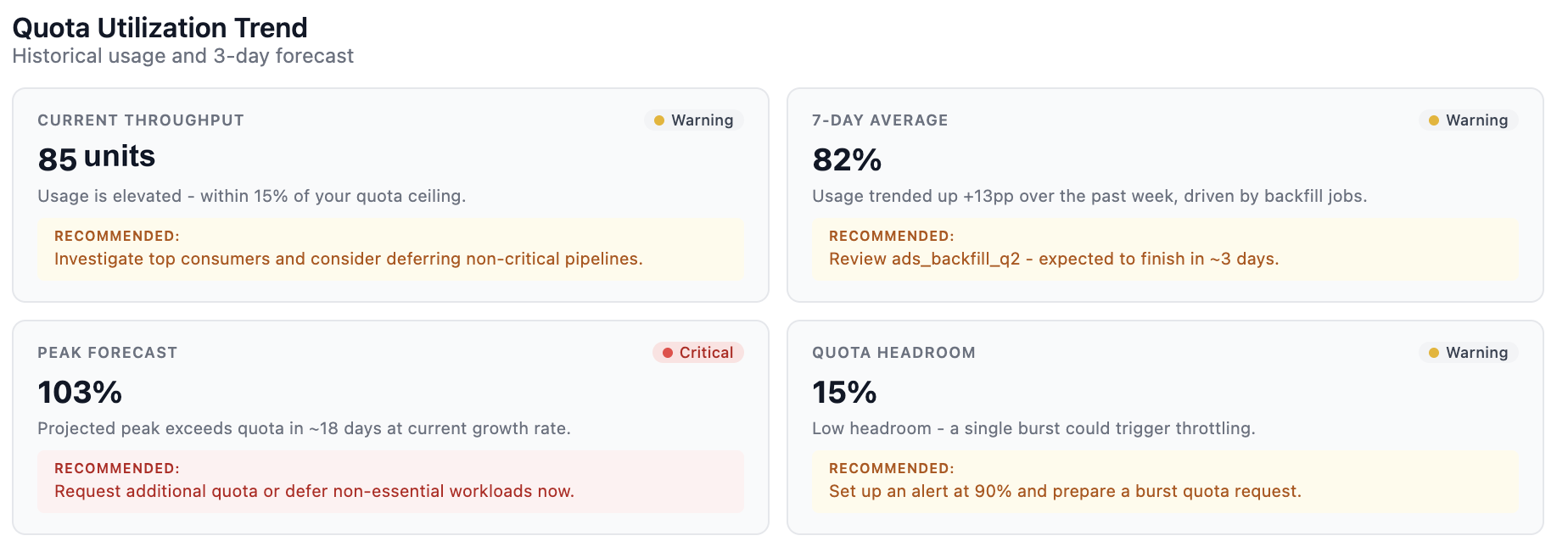
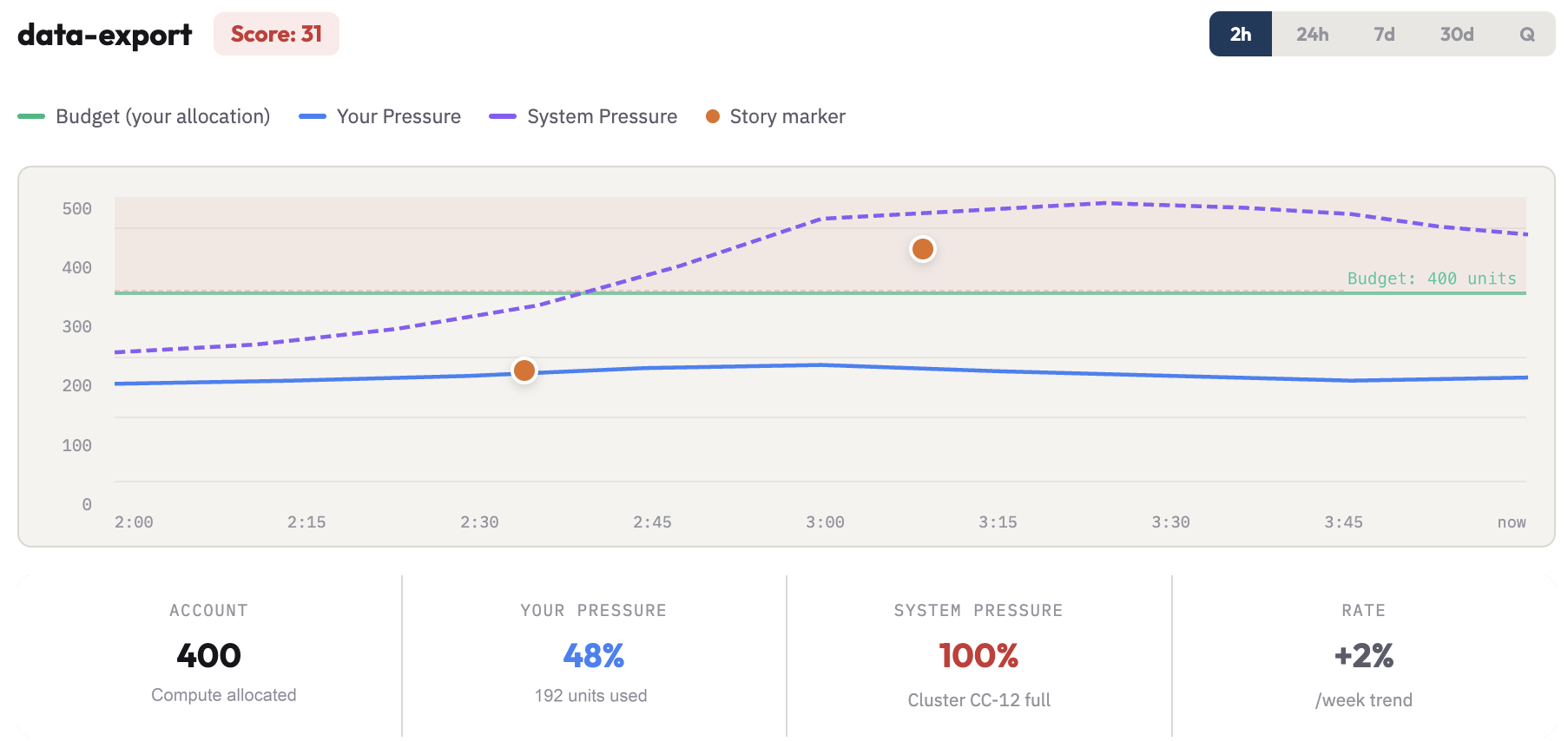
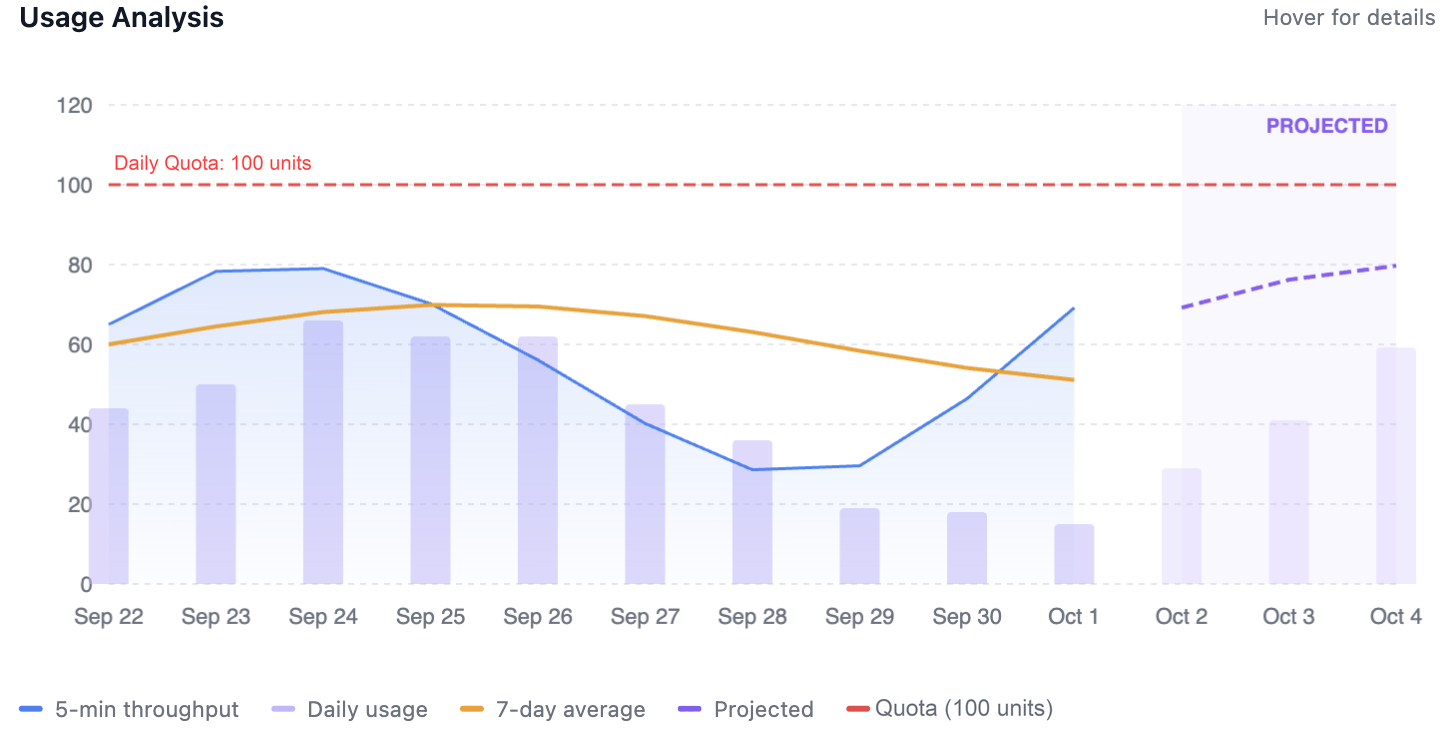
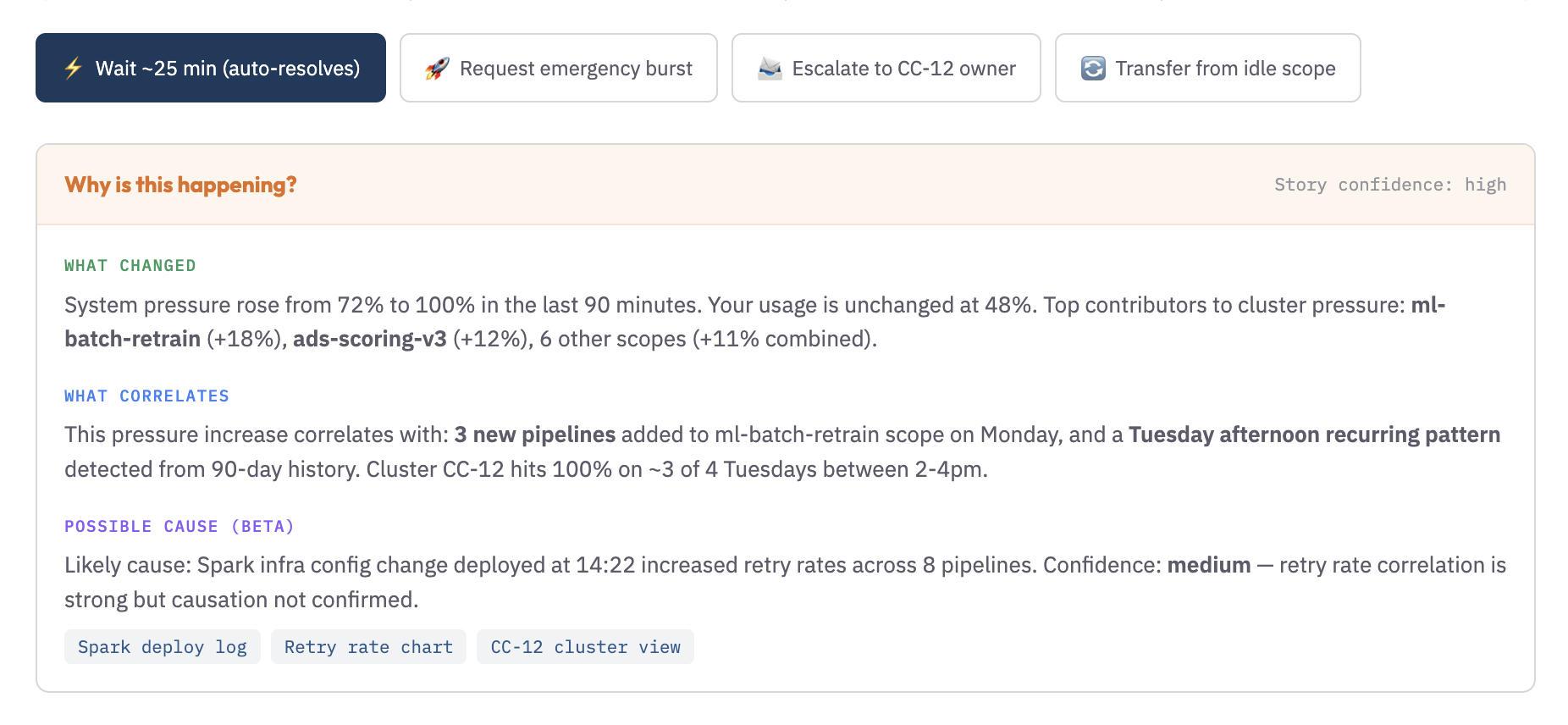
AI output and product reality
Illustrative values in synthetic compute units; not operational metrics.
AI proposal
My refinement

Keeping automation out of scope
When the discussion drifted toward automation, Research and I recognized it was outside the intended scope for this stage. I redirected the next phase to stay within the problem we had set out to explore.
04 / What I Learned
What I would carry into the next sprint
Orchestration matters.
More discussion isn’t useful without synthesis that makes it reviewable.
Checkpoints need authority.
The value was being able to redirect the workflow, not simply approve its output.
Product judgment remains essential.
Promising ideas still needed familiar language, realistic constraints, and a designer’s interpretation.
AI compressed exploration, not judgment.